Dawn Watch: Survival
- 4.0
- Rating
- 1.00M
- Installs
- Free
- Price

 Analysis by App-foxy
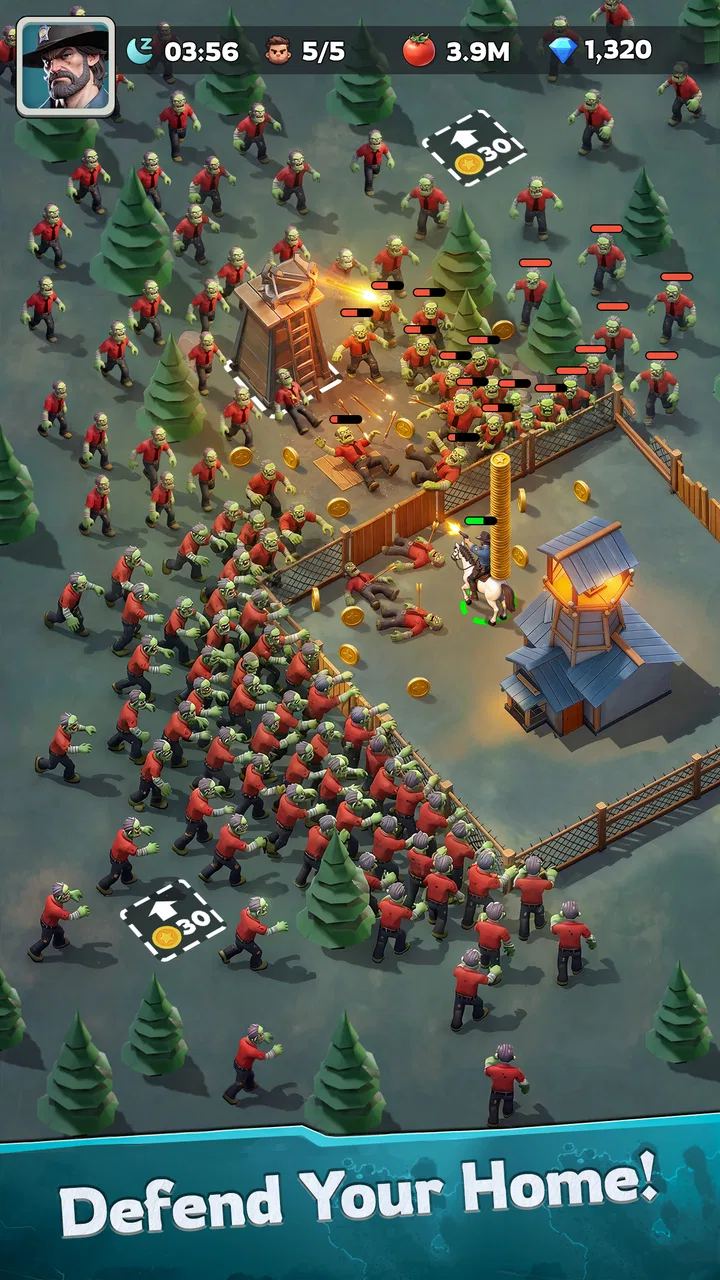
Dawn Watch: Survival is the kind of strategy game I open when I want to make a few meaningful choices, leave it running in the background, and return later to see whether my planning held up. Developed by StarFortune, it places its identity somewhere between idle progression, survival pressure, and strategic decision-making. That combination sounds simple, but it creates a particular rhythm: I am not constantly issuing commands, yet I am still thinking about what deserves attention before the next danger arrives.
After spending time with it, I found the strongest part of the experience is not speed. It is deciding what can safely wait. The game rewards players who look beyond the next upgrade and consider how today’s choice affects the next stretch of progress. That makes it more interesting than a purely passive idle game, although it also means people expecting a fast, action-heavy survival title may find the pace restrained.
Planning matters more than constant activity
The central appeal of this survival strategy game is its decision space. You are managing progress in a setting where resources, preparation, and timing matter more than simply tapping whenever something appears. I enjoyed the feeling of checking my position, identifying the most immediate weakness, and choosing whether to strengthen the present or prepare for a later problem.
You May Also Like

 Blood Strike: 2.5 Anniversary
Blood Strike’s Loadouts Turn Every Drop Into a Tactical Gamble
A close look at Blood Strike’s custom loadouts: how fast access to signature weapons reshapes its battle royale rhythm, rewards preparation, and narrows the gap between fights.

 Pandora - Music & Podcasts
Pandora’s Music Is Easy to Start, but Harder to Recover
Pandora’s strength is its low-effort path from a seed to a station. Its weak spot is how much confidence it asks you to place in connection, setup, and quiet recovery.

 8 Ball Pool
 Is Built on Rivalries, Rematches, and Routine
A close look at the rivalries, rematches, shared routines, and unanswered safety questions that turn a quick pool match into a persistent mobile community.

 Samsung Music
’s Quiet Strength Is Playing What You Already Own
Its reach comes less from spectacle than from dependable access to a personal library. That simplicity is both the app’s strongest retention engine and its ceiling.

 AccuWeather: Weather Radar
AccuWeather Review: A Quick, Clear Forecast for Everyday Decisions
For everyday plans, the best forecast is the one you can understand quickly. AccuWeather makes rain timing, radar, and local conditions easy to act on, with a few trade-offs.

 Hill Climb Racing
Why Hill Climb Racing Still Turns Crashes Into One More Run
A tiny car, a bumpy hill and one more upgrade: Hill Climb Racing keeps resurfacing because its simple chaos makes every near-miss feel personal.
More From Our News Desk



That choice creates a useful tension. An improvement that helps immediately can be tempting, especially when the game is moving slowly. However, spending everything on short-term comfort may leave less room for a more important response later. I learned to treat each return session as a small planning meeting: what is currently holding me back, what threat is likely to matter next, and which investment improves more than one part of my situation?
This is where Dawn Watch: Survival separates itself from a basic idle clicker. In a conventional idle game, the best answer is often to collect, upgrade, and repeat. Here, the idle layer is more satisfying when I use it as breathing room rather than as the entire game. I can let progress accumulate, but I still need to make deliberate decisions about how that progress is used.
The game also suits short visits. I can check it during a break, make a few adjustments, and leave. That does not mean every session feels equally active. There are stretches where waiting is part of the experience, and players who need continuous interaction should know that before committing. For me, the slower intervals work when I have already made a plan; they feel less rewarding when I am simply waiting for a number to rise.
Choosing a time horizon
One of the most useful habits I developed was separating immediate needs from long-term goals. If I focused only on the next obstacle, I sometimes improved the wrong area. If I planned too far ahead, I could struggle with a problem that was already affecting progress. The best approach was to keep two horizons in mind: a practical goal for the current session and a broader direction for the next several returns.
For example, I might decide that the current priority is stability rather than maximum growth. That can make the next few minutes feel less dramatic, but it gives me a safer platform from which to pursue stronger gains later. On another visit, the correct choice may be to accept some vulnerability in exchange for faster development. The game is most engaging when I am consciously accepting that trade rather than stumbling into it.
The most important skill is knowing what not to improve yet. That sounds obvious, but idle strategy games often encourage automatic spending. Dawn Watch: Survival is more enjoyable when I resist that impulse and keep some flexibility. Saving progress for a more useful decision can be less immediately satisfying, yet it often produces a better result than upgrading simply because an option is available.
Risk, reward, and the cost of being comfortable
The survival theme gives ordinary progression choices more weight. A safe position is valuable, but safety can become expensive if it prevents meaningful growth. I found myself asking whether I was preparing well or merely avoiding the next difficult step. That distinction is important because a strategy built entirely around caution can leave me behind, while a strategy built entirely around ambition can become fragile.
My preferred approach was controlled risk. I would first make sure the foundation was reliable, then commit resources toward a goal that could improve future options. This is not a game where I want every decision to be an emergency. I would rather create enough stability that I can take one calculated risk instead of being forced into several desperate ones.
That approach also makes the game approachable for people who enjoy planning but do not want the intensity of a real-time competitive strategy title. I am not constantly reacting to another human player. The pressure comes from managing my own choices and recognizing when a comfortable routine is no longer enough. Compared with a traditional base-building game, the experience feels lighter and easier to fit around daily life, but it also offers less of the detailed control that dedicated strategy fans may expect.
Players should also consider the free-to-play structure. The game itself is free, while optional purchases range from $0.99 to $99.99 per item. I would approach those purchases as convenience decisions rather than as part of the core strategy. The most satisfying moments for me came from making a better plan with what I had, not from treating spending as the solution to every slowdown. Anyone who dislikes games that present paid shortcuts should be prepared to keep a firm personal limit.
How I handle a difficult return session
A realistic use case is a player checking the game after work, when there is only enough time for a quick review of progress. I would not immediately spend everything that had accumulated. First, I would look at what caused the last setback, then identify whether the problem was lack of strength, poor timing, or an overly ambitious plan. That short pause changes the quality of the session. Instead of reacting to the largest visible button, I am correcting the decision that created the problem.
If progress feels stuck, I recommend changing one major priority at a time. Altering everything at once makes it difficult to understand what helped. A focused adjustment also makes the next return more informative: I can see whether the new direction actually improved the situation or simply delayed the same obstacle. This is a small habit, but it gives the idle loop more strategic meaning.
Another useful trade-off is deciding when to stop pushing. If a session has already produced a good improvement, continuing to chase a slightly better result may expose the whole plan to unnecessary risk. I prefer leaving the game in a stable state and returning later rather than turning every successful session into a test of how far I can stretch it. That restraint is especially helpful for players who tend to overplay resource-management systems.
Adapting instead of repeating the same build
Dawn Watch: Survival becomes more interesting when I treat each setback as information. Repeating the same choices and hoping that a little more idle progress will solve everything is rarely satisfying. A better response is to ask which assumption was wrong. Did I prioritize growth before securing enough stability? Did I hold back too long? Did I spend resources in a way that solved a visible problem but created a larger one later?
This makes adaptation more important than memorizing one perfect route. I do not want a strategy game to become a checklist that I follow without thinking. The pleasure here comes from adjusting the balance between preparation and expansion. A player who enjoys experimenting with priorities will get more from the system than someone looking for a single guaranteed sequence.
There is also a practical advantage to changing direction gradually. When I make a small adjustment, I can preserve what is already working while addressing the weak point. A complete reset of my approach may feel decisive, but it can waste progress and make the game feel more erratic. I found that measured adaptation gave me a clearer sense of cause and effect.
When patience helps and when it hurts
Patience is one of the game’s strengths, but it is not automatically the right answer. Waiting can allow resources or progress to build, yet waiting without a purpose is just downtime. I try to leave the game running or step away only when I know what the accumulated progress is meant to support. That turns the idle element into a planning tool instead of a substitute for planning.
On the other hand, pushing too frequently can lead to inefficient choices. I might spend resources simply because I am present, even though a later return would give me a better opportunity to use them. The game encouraged me to think in terms of timing windows: not just whether I can afford something, but whether buying it now improves my next decision.
This is a subtle distinction, and it will not appeal to everyone. Players who want immediate feedback from every tap may see these pauses as empty. I see them as the space where the strategy happens. The game works best for someone who is comfortable with a plan unfolding over several check-ins rather than demanding a complete payoff in one sitting.
What changes over a longer stretch of play
Over time, the main challenge shifts from learning the basic rhythm to maintaining a coherent direction. Early progress can feel straightforward because almost any sensible improvement helps. Later, choices matter more because resources and attention have to be assigned with greater care. That is where the game’s depth comes from: not from overwhelming the player with controls, but from making the consequences of priorities easier to notice.
I also became more aware of opportunity cost. Choosing one path means postponing another, and postponement can matter as much as the upgrade itself. A decision may be strong in isolation but poorly timed in the wider plan. This is the kind of depth I appreciate in a mobile strategy game because it gives me something to think about without requiring a long uninterrupted session.
Still, the long-term appeal depends heavily on how much enjoyment a player gets from incremental progress. If you need a clear ending, a large campaign structure, or frequent dramatic changes, this may feel repetitive. The game’s loop is built around refining decisions and returning to see their results. That can be relaxing and quietly absorbing, but it is not designed to replace a more expansive strategy experience.
Who should play it, and who should skip it
I would recommend Dawn Watch: Survival to players who like idle progression with strategic trade-offs, especially those who enjoy checking a game several times throughout the day. It is a good fit if you like deciding between immediate security and future growth, and if you are willing to let a plan develop instead of demanding constant action.
It is also suitable for someone who wants a free game to sample without making a purchase commitment at the start. The Teen content rating is worth keeping in mind for families choosing games for younger players. The game’s free entry point makes experimentation easy, while the optional item prices mean I would still recommend setting a spending boundary before playing regularly.
I would skip it if my priority were direct tactical control, rapid combat, or a deeply competitive multiplayer environment. A conventional real-time strategy game would be better for someone who wants every second to be filled with commands. A pure idle game may be better for someone who wants almost no decisions at all. Dawn Watch: Survival sits between those choices, and that middle ground is both its identity and its limitation.
Depth that rewards a measured routine
The game’s current version is 1.1.1787387448, and it runs on Android starting with version 5.1. That broad device compatibility makes it easier to try on older hardware, although the actual comfort of play will still depend on the phone and how well it handles the game over longer periods. I would give it a short trial on the intended device before deciding whether it belongs in my daily rotation.
Its audience is already substantial, with over a million installs, and the average score sits at 4.0 from around 7,300 ratings. I read those figures as a sign that the concept has found a steady audience, not as proof that every player will enjoy its pace. The number of written reviews is around 300, but my own reaction is more useful here: the game succeeds when I approach it as a patient strategy loop rather than as a conventional survival action title.
One of the better ways to keep the experience fresh is to give each play period a specific purpose. One session can focus on recovering from a setback, another on building a safer foundation, and another on testing whether a more ambitious direction is sustainable. This prevents the game from becoming a mindless collection routine and gives each return a clear question to answer.
I also recommend judging progress by the quality of future choices, not only by the size of the current reward. A decision that leaves me with several workable options is often better than one that produces a larger immediate result but locks me into a narrow path. That is a meaningful strategic lesson, and it is where the game feels more thoughtful than its idle format might suggest.
There are limits to that depth. Without a strong interest in incremental systems, the slower sections may feel like waiting rather than strategy. The free-to-play model may also create friction for players who want a completely uninterrupted progression curve. I did not find those issues fatal, but they are important when deciding whether this particular blend matches my habits.
My verdict after weighing the trade-offs
Dawn Watch: Survival is a patient, accessible strategy game built around the question of when to act and when to prepare. I like that it gives idle progress a purpose instead of making it the entire experience. Its best decisions involve trade-offs between safety, growth, and flexibility, and those choices become more rewarding when I think several returns ahead.
It is not the right recommendation for someone seeking constant action or a highly detailed strategy sandbox. The pacing can be slow, and optional purchases from $0.99 to $99.99 per item make personal spending discipline sensible. However, players who enjoy measured planning, short check-ins, and adapting after setbacks will find a more thoughtful loop here than the simple idle label suggests.
StarFortune has created a game I would recommend to a friend who wants strategy that fits around a busy day. I would tell that friend to protect resources, avoid upgrading automatically, and treat every setback as feedback about the plan rather than as a reason to rush. If that style sounds appealing, the free entry point makes it easy to see whether the rhythm works for you. In my experience, the game is at its strongest when I stop asking how quickly I can progress and start asking whether my next decision leaves me better prepared.
FAQs for Dawn Watch: Survival
01What is Dawn Watch: Survival about?
Dawn Watch: Survival is a survival-focused game built around exploration, resource gathering, crafting, and defending yourself in a dangerous environment. You need to search for useful materials, manage your supplies, improve your equipment, and make careful decisions when facing threats. Progress depends on planning rather than simply attacking everything, so it may appeal to players who enjoy a slower, more strategic survival experience.
02Can I play Dawn Watch: Survival offline?
Offline availability can depend on the specific version and features being used. The core survival experience may be accessible without a constant connection, but some functions—such as advertisements, cloud saving, updates, online events, or other connected services—can require internet access. Before downloading, check the current store description and the permissions listed for your Android or iOS device, especially if you expect to play while traveling.
03Is Dawn Watch: Survival free to download and play?
Dawn Watch: Survival can generally be downloaded without an upfront purchase, but free access does not necessarily mean that every item or feature is available at no cost. Games in this category may include optional in-app purchases, rewarded advertisements, or time-saving upgrades. You can usually make progress through regular play, although spending money may accelerate resource collection or equipment improvements.
04Is Dawn Watch: Survival suitable for children?
Parents should review the game’s official age rating before allowing children to play. Survival gameplay commonly includes danger, combat, frightening situations, and pressure to manage limited resources. In addition, advertisements, in-app purchases, and online or account-related features may be present depending on the platform and current release. Parental controls are recommended if children use the device, particularly to prevent accidental purchases.
05What devices are compatible with Dawn Watch: Survival?
Compatibility depends on the operating system, device model, available storage, and the minimum software version required by the current release. A newer phone or tablet will usually provide smoother performance, faster loading, and better stability than an older low-end device. Check the Google Play Store or Apple App Store listing before installing, and make sure you have sufficient free space for the initial download and future updates.
Pros
- Atmospheric post-apocalyptic setting creates a strong survival-game mood.
- Exploration rewards careful planning and resource management.
- Crafting gives collected materials a useful purpose.
- Different threats keep encounters from feeling completely repetitive.
- Offline-friendly design is convenient for playing without a connection.
Cons
- Progress can feel slow when resources become scarce.
- Some areas may look repetitive during longer play sessions.
- Combat controls can take time to feel comfortable on mobile.
- Limited guidance may leave new players unsure what to do next.
- Longer sessions may drain battery quickly on older devices.

Dawn Watch: Survival
Gallery